
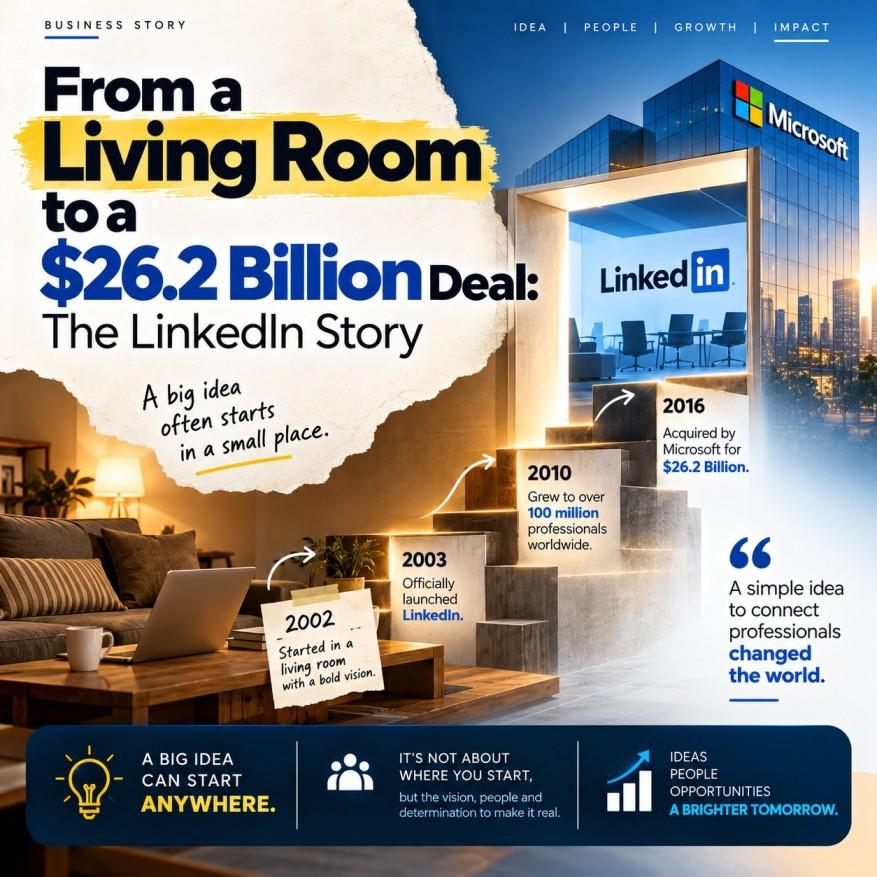
From a Living Room to a $26.2 Billion Deal: The LinkedIn Story

The Inspiring Journey of LinkedIn: How a Simple Startup Idea Became a Global Professional Networking Giant
Every successful business has a story. Some begin with huge investments, while others start with nothing more than a powerful idea and a vision for the future.
LinkedIn is one such example.
What started as a small startup in 2002 eventually transformed into one of the world's leading professional networking platforms. Its journey from a simple idea to Microsoft's historic $26.2 billion acquisition is a remarkable example of entrepreneurship, innovation, and strategic business growth.
At BluePages, we explore inspiring business stories, entrepreneurial journeys, and technology-driven success stories that offer valuable lessons for professionals, startups, and business owners.
Let's discover how LinkedIn built its global presence and changed the way the world connects professionally.
1. The Beginning of LinkedIn: A Simple Idea with a Big Vision
LinkedIn's journey began in 2002 when entrepreneur Reid Hoffman and his co-founders started developing a platform focused on professional networking.
The idea was different from traditional social networking platforms. Instead of connecting people primarily for personal interactions, LinkedIn aimed to connect professionals, businesses, recruiters, and entrepreneurs.
On May 5, 2003, LinkedIn officially launched.
Its initial growth was modest, but the founders had a clear vision: create a professional network where people could build relationships, discover opportunities, and grow their careers.
This simple idea eventually became the foundation of a global business.
2. How LinkedIn Changed Professional Networking
Before LinkedIn, professional networking largely depended on personal contacts, business events, and traditional resumes.
LinkedIn introduced a new digital approach that allowed professionals to build their identities and connect with opportunities online.
The platform gradually developed features such as:
- Professional profiles and digital resumes
- Job searching and recruitment solutions
- Business networking and connections
- Professional content sharing
- Company pages and brand promotion
- Premium subscriptions and business tools
These innovations helped LinkedIn become more than a networking website. It evolved into an important part of the global professional ecosystem.
3. The Business Strategy Behind LinkedIn's Growth
LinkedIn's success was not achieved through user growth alone. Its business strategy focused on delivering value to professionals and organizations.
A. Building a Strong Professional Community
LinkedIn created an environment where professionals could connect, exchange knowledge, share experiences, and discover opportunities.
As the community expanded, the platform became increasingly valuable.
B. Developing Multiple Revenue Streams
LinkedIn introduced different revenue models to support its long-term growth.
Its major revenue streams included:
- Talent Solutions for recruitment and hiring
- Marketing Solutions for advertising
- Premium subscriptions for professionals
- Sales solutions for businesses
This diversified business model helped LinkedIn generate revenue from different customer segments.
C. Investing in Innovation
LinkedIn continuously improved its technology, products, and user experience to meet the changing needs of the professional world.
Its focus on innovation helped the company remain relevant in an increasingly competitive digital market.
4. Microsoft's $26.2 Billion Acquisition: A Historic Business Deal
One of the biggest milestones in LinkedIn's history arrived on June 13, 2016.
Microsoft announced its agreement to acquire LinkedIn in an all-cash transaction valued at approximately $26.2 billion, including LinkedIn's net cash.
The announced offer was $196 per share.
The acquisition was completed on December 8, 2016.
The deal brought together Microsoft's enterprise technology ecosystem and LinkedIn's professional network.
The strategic objective was to create better professional experiences by connecting productivity tools, business solutions, and professional relationships.
Despite becoming part of Microsoft, LinkedIn continued operating with its own brand, identity, and organizational culture.
5. What Made LinkedIn Worth Billions?
LinkedIn's value came from much more than its website or technology.
Several important factors contributed to its extraordinary business value.
Global Professional Network: A large international community of professionals and businesses.
Professional Data and Insights: Valuable information about career histories, skills, industries, and professional connections.
Strong Revenue Model: Multiple income sources through recruitment, advertising, subscriptions, and sales solutions.
Brand Trust: Recognition as one of the leading platforms for professional networking.
Strategic Business Opportunities: The potential to integrate professional networking with Microsoft's enterprise and productivity products.
This acquisition demonstrated how a digital platform can become a valuable strategic business asset.
6. Five Important Business Lessons from LinkedIn
LinkedIn's journey provides several lessons that entrepreneurs, startups, and established businesses can apply.
1. Start with a Real Problem
LinkedIn identified a gap in professional networking and developed a solution around it.
2. Build Value Before Focusing on Revenue
Creating a useful product and building customer trust can establish a strong foundation for long-term growth.
3. Think Beyond the Local Market
Digital platforms can reach international audiences when they solve problems that exist across different markets.
4. Keep Innovating
Businesses must continuously adapt to changing technologies, customer expectations, and market conditions.
5. Develop a Scalable Business Model
A strong business model should support growth while maintaining product quality and customer satisfaction.
7. The Future of Professional Networking and Digital Business
LinkedIn's journey reflects a larger transformation in the global business environment.
Today, digital platforms are changing how companies recruit employees, promote services, develop partnerships, and build professional relationships.
Technology, artificial intelligence, digital marketing, and online networking continue to create new opportunities for businesses and entrepreneurs.
For startups and growing organizations, understanding these developments can help identify new opportunities and build sustainable business strategies.
At BluePages, we believe that learning from successful companies and understanding changing business trends can help individuals and organizations make smarter decisions.
Conclusion: Great Businesses Begin with Great Ideas
From a small startup idea in 2002 to Microsoft's $26.2 billion acquisition in 2016, LinkedIn's journey demonstrates the power of vision, innovation, and long-term thinking.
Its success was built on identifying a real problem, creating meaningful value, developing a strong professional community, and continuously evolving.
The biggest lesson is simple: you do not need to start with a massive business to create something extraordinary. You need a meaningful idea, a clear strategy, and the determination to grow.
Stay informed. Discover opportunities. Learn from success stories.
Explore more business insights, inspiring company stories, entrepreneurship trends, and technology updates with BluePages.




No comments yet. Be the first to comment!