
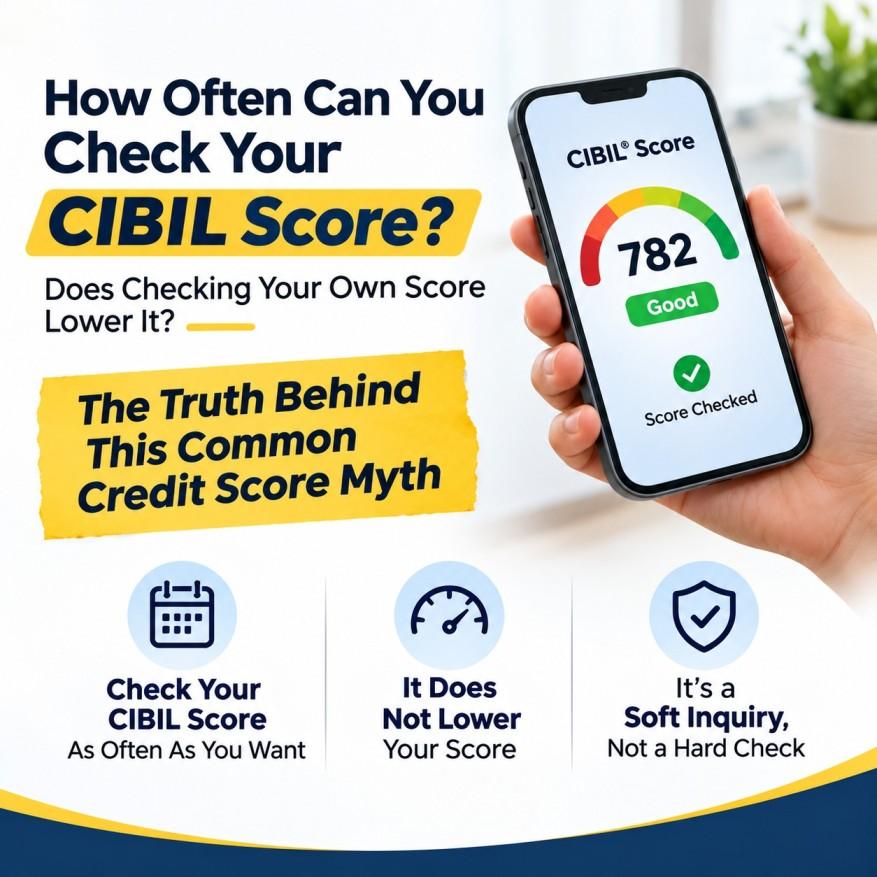
How Often Can You Check Your Cibil Score Does Checking Your Own Score Lower-it-the-Truth Behind-this Common Credit Score Myth

How Often Should You Check Your CIBIL Score? A Complete Guide by Jora Capital
In today's digital financial world, maintaining a healthy credit score has become essential for Indian borrowers. Whether you are applying for a personal loan, home loan, business loan or credit card, your CIBIL score can play an important role in determining your credit eligibility.
However, one question continues to confuse millions of people: Does checking your own CIBIL score lower it?
Many borrowers avoid checking their credit reports because they believe frequent enquiries can damage their scores. But is this really true?
In this financial awareness guide published on Blue Pages, we explore the truth behind this common misconception, with insights from Jora Capital, a financial technology platform focused on making credit information and borrowing decisions easier to understand.
What Is a CIBIL Score and Why Is It Important?
A CIBIL score is a three-digit numerical representation of an individual's credit history, generally ranging from 300 to 900.
It is generated by TransUnion CIBIL based on information reported by banks and other lending institutions.
A CIBIL score helps lenders evaluate an applicant's creditworthiness before approving loans or credit cards.
A stronger credit profile may improve your chances of qualifying for suitable financial products, although approval also depends on income, existing obligations, repayment capacity and lender policies.
As digital financial services continue to expand across India, platforms such as Jora Capital are helping consumers explore credit-related information and make more informed financial decisions.
Does Checking Your Own CIBIL Score Reduce It?
No. Checking your own CIBIL score does not reduce your credit score.
When you access your own credit report, it is considered a soft enquiry.
A soft enquiry does not negatively affect your CIBIL score, regardless of how frequently you check it.
For example, suppose your current CIBIL score is 750. You check it today and again next month. Simply reviewing your score will not cause it to decrease.
However, changes in your repayment history, outstanding balances or reported credit information may cause your score to change between checks.
This distinction is important for borrowers who want to monitor their financial health without unnecessarily worrying about their credit ratings.
Understanding Soft Enquiries and Hard Enquiries
One of the biggest reasons behind the CIBIL score myth is confusion between soft and hard credit enquiries.
What Is a Soft Enquiry?
A soft enquiry occurs when you access your own credit information for monitoring purposes.
Examples include:
-
Checking your own CIBIL score
-
Reviewing your personal credit report
-
Monitoring changes in your credit history
-
Checking your score through an authorised credit monitoring service
Soft enquiries do not lower your credit score.
What Is a Hard Enquiry?
A hard enquiry generally occurs when a lender accesses your credit report while evaluating a new credit application.
Examples include applying for a personal loan, credit card, vehicle loan or home loan.
Multiple hard enquiries within a short period may negatively affect your credit score.
This is why borrowers should compare financial products carefully before submitting several applications.
How Often Should You Check Your CIBIL Score?
There is no fixed limit on how often you can check your own CIBIL score without affecting it.
For most borrowers, checking every three to six months is a practical habit.
However, you may want to review your credit report more frequently when:
-
Planning to apply for a major loan
-
Improving your credit history
-
Monitoring recently repaid loans
-
Investigating unexpected credit score changes
-
Checking for incorrect or unfamiliar credit accounts
Regular monitoring helps borrowers stay informed and identify possible reporting errors early.
Five Factors That Can Actually Affect Your CIBIL Score
1. Late EMI Payments
Missing loan instalments or making delayed payments can negatively affect your credit history.
Paying EMIs and credit card bills on time is one of the most important habits for maintaining a healthy credit profile.
2. High Credit Card Utilisation
Using a large percentage of your available credit limit may indicate financial pressure.
Keeping outstanding balances manageable can support responsible credit management.
3. Multiple Credit Applications
Applying for numerous loans or credit cards within a short period can result in several hard enquiries.
Borrowers should evaluate eligibility and repayment affordability before applying.
4. Loan Defaults
Unpaid loans, overdue accounts and defaults can significantly affect your creditworthiness.
5. Incorrect Credit Report Information
Errors in reported repayment records or account details may affect your credit profile.
Regular credit report monitoring allows borrowers to identify inaccuracies and raise disputes.
How Jora Capital Supports Financial Awareness in India
Understanding credit scores is only one part of responsible borrowing. Consumers also need reliable information about loan eligibility, repayment planning, borrowing costs and financial commitments.
Jora Capital, founded by Amar Nalawade and Saurav Jaiswar, focuses on simplifying the credit journey through its digital platform and financial education initiatives.
With its philosophy of "Smart Credit, Made Simple," Jora Capital encourages borrowers to understand their financial position before making credit decisions.
By promoting awareness about CIBIL scores, credit enquiries and responsible borrowing habits, Jora Capital aims to help Indian consumers approach financial decisions with greater confidence.
Explore Jora Capital:
Website: https://joracapital.co/
Download the Jora Capital App: https://play.google.com/store/apps/details?id=com.joracapital.app&hl=en_IN
Blue Pages: Promoting Financial Knowledge and Digital Business Discovery
Access to useful financial information is increasingly important as Indian consumers explore digital lending services and online financial platforms.
Blue Pages supports digital business discovery and online brand visibility by connecting audiences with information about businesses, services and emerging brands across industries.
Through its business-focused content, Blue Pages helps readers discover companies and understand services that may be relevant to their needs.
Blue Pages provides opportunities for businesses to strengthen their digital presence through informative, industry-related content and brand-focused articles.
By featuring educational topics such as CIBIL score awareness, responsible borrowing and credit management, Blue Pages can help connect readers with useful financial information while introducing them to businesses such as Jora Capital.
This article is part of that broader effort to make financial education more accessible and understandable for Indian audiences.
Simple Ways to Maintain a Healthy Credit Score
Improving your credit profile requires consistent financial discipline rather than frequent borrowing.
Start by paying your EMIs on time, managing credit card balances responsibly and avoiding unnecessary credit applications.
Review your credit report periodically to identify errors or suspicious activity.
Most importantly, borrow according to your repayment capacity.
A strong credit history develops over time through responsible financial behaviour.
Frequently Asked Questions About CIBIL Scores
1. Does checking my own CIBIL score lower it?
No. Checking your own CIBIL score is a soft enquiry and does not negatively affect your credit score.
2. Can I check my CIBIL score every month?
Yes. You can check your own score monthly without a scoring penalty. However, checking every three to six months may be sufficient for many borrowers.
3. Does applying for multiple loans affect my CIBIL score?
Multiple loan applications may generate hard enquiries, which can affect your credit score, particularly when applications are made close together.
4. Is a CIBIL score of 750 considered good?
A score of 750 is generally considered favourable by many lenders. However, lending decisions depend on additional eligibility criteria.
5. How can I improve my CIBIL score?
Make timely payments, keep credit utilisation manageable, avoid unnecessary credit applications and regularly review your credit report for inaccuracies.
6. Where can I learn more about responsible borrowing?
You can explore financial education resources from credit bureaus and trusted financial institutions. Jora Capital also shares information about credit awareness and borrowing decisions through its digital presence.
Conclusion: Checking Your CIBIL Score Is a Smart Financial Habit
The belief that checking your own CIBIL score lowers it is a common credit myth.
Personal credit checks are soft enquiries and do not negatively affect your score. What matters more is how responsibly you manage loans, credit cards and repayment obligations.
Understanding this difference can help you make better financial decisions and avoid unnecessary borrowing mistakes.
Through educational content published on Blue Pages, readers can discover financial awareness resources and learn about emerging digital finance platforms such as Jora Capital.
With the right information and consistent financial discipline, borrowers can take meaningful steps toward a healthier credit future.
Jora Capital — Smart Credit, Made Simple.
About Jora Capital
Jora Capital is a digital financial platform founded by Amar Nalawade and Saurav Jaiswar, focused on making credit-related information and financial decisions easier to understand.
Website: https://joracapital.co/
Download the App: https://play.google.com/store/apps/details?id=com.joracapital.app&hl=en_IN
Amar Nalawade, Co-Founder: https://www.linkedin.com/in/amar-nalawade-44900b409/
Saurav Jaiswar, Co-Founder: https://www.linkedin.com/in/saurav-jaiswar-162184408/
Disclaimer: This article is intended for general financial education and does not constitute personalised financial advice. Credit scores and loan eligibility depend on individual circumstances and lender policies.




No comments yet. Be the first to comment!